

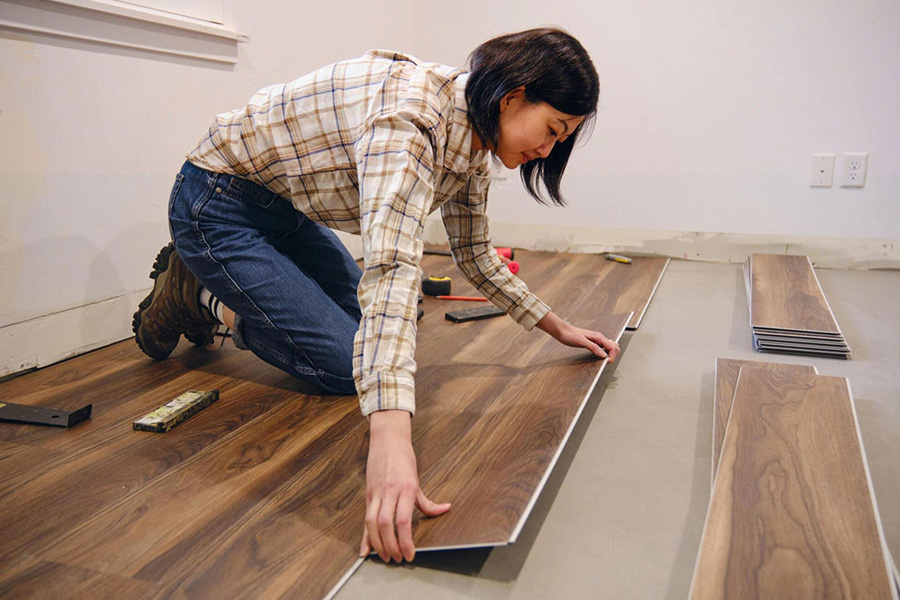
Hardwood floors are gorgeous. They’re elegant, timeless, and make any room look instantly more expensive.
They’re also magnets for scuff marks. One trip across the kitchen in trainers, and suddenly your pristine oak looks like it’s hosted a particularly aggressive game of indoor football.
Fortunately, most scuffs aren’t permanent, and fixing them doesn’t require a degree in carpentry. You’re about to learn exactly how to tackle them, so your floors can go back to looking presentable. So, let’s get started.
Tackling Light Scuff Marks
Before you panic and start researching floor refinishing costs, try the simplest solutions first. You’d be surprised how often they work.
A clean tennis ball works wonders on light scuffs. Just rub it gently over the mark using a bit of pressure, and watch it disappear like magic.
If you don’t have a tennis ball lying about, a pencil eraser does the job, too. Use a white eraser to avoid adding new marks, and rub in small circular motions until the scuff lifts.
Baking soda mixed with a tiny amount of water creates a paste that’s gentle but effective. Apply it to the scuff with a soft cloth, rub lightly, then wipe clean with a damp cloth and dry immediately.
For truly stubborn surface marks, a small dab of toothpaste on a soft cloth can help. Use the non-gel variety, rub it in gently, then wipe away any residue. Your floor will smell minty fresh, which is an odd bonus.
Using Household Oils
Sometimes, the solution is sitting in your kitchen cupboard, waiting to save the day. Oils work surprisingly well on scuff marks that simply won’t budge.
Olive oil, vegetable oil, or even coconut oil can help lift stubborn scuffs whilst adding a bit of shine to your floor. Apply a small amount to a soft cloth and rub gently over the mark.
The oil helps break down the rubber or residue causing the scuff, making it easier to wipe away. Once the mark disappears, wipe the area with a clean, dry cloth to remove any excess oil.
Be sparing with the amount you use, as too much oil can leave your floor slippery and attract dirt, which defeats the purpose of cleaning in the first place.
This method works particularly well on scuffs from trainers and shoes, which are common problems in households where we’re constantly tracking things indoors.
Deep Cleaning Tougher Scuffs
When the gentle approach doesn’t cut it, it’s time to bring out slightly stronger solutions without going overboard.
White vinegar diluted with water works brilliantly for tougher scuffs. Mix equal parts vinegar and water, dampen a cloth, and rub the scuff until it lifts.
Be careful not to saturate the floor, though. Too much liquid can damage the wood or seep between planks, causing warping over time.
WD-40 is another surprisingly effective option. Spray a tiny amount onto a cloth, not directly onto the floor, and rub the scuff gently. Wipe away any oily residue with a clean, damp cloth immediately afterwards.
If you’re dealing with scuffs from furniture or particularly aggressive shoe soles, a dedicated hardwood floor cleaner designed for UK homes can save you time and effort, which we’ll be covering next.
Removing Scuffs with Specialist Floor Products
When home remedies don’t quite do the trick, it’s worth investing in products specifically designed for hardwood floors. They’re formulated to remove marks without damaging the finish.
Look for scuff removers or hardwood floor cleaners available in UK supermarkets and DIY stores. These products are gentle enough for regular use but strong enough to tackle persistent marks.
Apply the product according to the instructions, usually with a microfibre cloth or mop, then work in small sections and buff the area afterwards to restore shine.
Many of these products also leave a protective layer that helps prevent future scuffs, which is a nice bonus if your floors see a lot of foot traffic.
Preventing Scuff Marks in the First Place
Cleaning scuffs is one thing, but preventing them from showing up in the first place is far more satisfying.
Start with a strict no-shoes policy indoors. Yes, it feels very continental, but your floors will be better for it.
Place mats or rugs in high-traffic areas like hallways and entrances; they’ll catch the worst of the dirt and scuffs before they reach your precious hardwood.
And make sure to stick felt pads under furniture legs. They’re cheap, easy to apply, and prevent chairs from leaving drag marks every time someone gets up from the dinner table.
If you have pets, keep their claws trimmed. It’s better for your floors and probably better for your sofa too.
Regular sweeping or vacuuming also helps. Dirt and grit act like sandpaper underfoot, making scuffs worse and dulling the finish over time.
Calling in Professional Help When Needed
Sometimes, despite your best efforts, scuffs refuse to budge, or your floors need more attention than a tennis ball and some elbow grease can provide.
If you’ve tried everything and the marks are still there, or if the scuffs have damaged the finish itself, it might be time to call in professionals.
Many apartment cleaning services in the UK now offer deep cleaning for hardwood floors as part of their packages. They have industrial-grade equipment and products that can tackle problems you’d struggle with at home.
This is especially useful if you’re preparing to move out of a rental property. It’s also great for restoring your floors to their former glory without spending an entire weekend on your hands and knees.
Professional services can also reseal or refinish floors if the damage goes beyond surface scuffs. It’s an investment, but it can add years to your floor’s lifespan.
Conclusion
There you have it. Scuff marks might be annoying, but they’re not unbeatable.
With a bit of effort and some patience, your hardwood floors can go from scuffed disaster zone to polished perfection. Congratulations on making it this far—you’re now officially equipped to tackle whatever your floors throw at you.
So grab your supplies, show those scuffs who’s boss, and enjoy the satisfaction of floors that actually look cared for. Your hardwood deserves it, and honestly, so do you.