

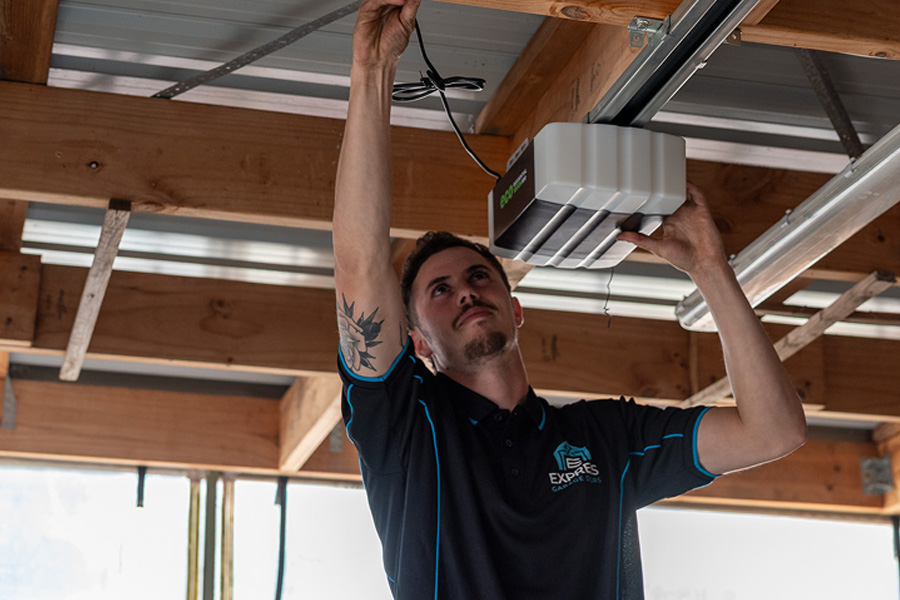
You click on the remote, sit back, and wait for something to happen, and nothing happens. The good news is that a non-responsive opener does not always mean a major repair.
In many cases it is a simple issue that can quickly be identified. There are few troubleshooting steps to try before calling technician.
So, here is what to check first when your garage door opener fails to respond.
Check the Power Supply
This is primarily caused due to a power failure.
First check if the opener is getting power.
Look for:
- A disconnected power cord
- A tripped circuit breaker
- A blown fuse
- A switched-off power outlet
If the opener lights are dead, often power is the first thing to check.
A good garage door opener in Sydney will cease to work if there is no power.
Test the Remote Control
In some cases, the opener works perfect, but the remote doesn’t.
Try these quick checks:
Replace the Batteries
One of the most common reasons why a remote control stopped working is weak batteries.
Move Closer to the Door
It operates by generating wireless signals, but its performance can be influenced by signal interference or a limited area.
Test Another Remote
If another remote works, however, the original transmitter itself is likely at fault.
Some checks take but a few moments that will not only save you time, but avert wasting money in calling out a service engineer.
Inspect the Safety Sensors
Most garage doors come with safety sensors.
In case these sensors are blocked, it will not detect and make the opener work.
Check for:
- Dirt or dust on the camera lenses
- Obstructions between sensors
- Loose wiring
- Flashing sensor lights
Cleaning the sensors and re-aligning them often results in full operation again.
Check the Manual Lock
A lot of garage doors also come with a manual way to lock them.
The device won’t respond because the lock has unintentionally been enabled and the door may not open.
Check the lock and make sure it isn’t engaged before you next try opening the opening unit again.
Look for Track or Door Damage
Sometimes a little bit of physical damage prevents the opener from being able to perform its function.
Inspect the door for:
- Bent tracks
- Damaged rollers
- Obstructions in the track
- Misaligned sections
In more severe instances, panels or other components sustaining structural damage may cause the entire system to require replacement, and this is when garages need to deal with garage door panel repair.
Check the Emergency Release Cord
The emergency release mechanism in a garage door is used to disconnect the door from the opener.
With the cord having been pulled, the motor may be operated without running the door.
Reattach the trolley according to the manufacturer’s instructions and test the opener once again.
After a power outage (or manual operation) this is surprisingly common.
Reset the Garage Door Opener
The reason behind this is that the electronic parts in some opener systems can start to malfunction from time to time, which needs a reset.
Check the owners’ manual for exact instructions, as methods differ from model to model.
A reset solves temporary electronic glitches for many an owner of a garage door opener, Sydney.
When to Call a Professional?
If none of these solutions help, there may be a more serious issue at work.
Potential causes include:
- Motor failure
- Damaged circuit boards
- Broken springs
- Faulty wiring
- Internal gear damage
Damaged sections of your door may also need garage door panel replacement in some cases before the garage opens safely again.
Final Thoughts
The lack of a response from a garage door opener does not necessarily indicate a complete system failure. Most of them have to do with power, remote control not working, the sensor is misaligned, or the emergency release got activated.
These are only a few of the basic steps you may take before arranging for professional service. In case the problem still continues, a trained technician can determine and fix it so that your Sydney garage opener works in a safe and reliable manner. In some cases, garage door panel replacement will also be part of the solution for instances involving physical damage.